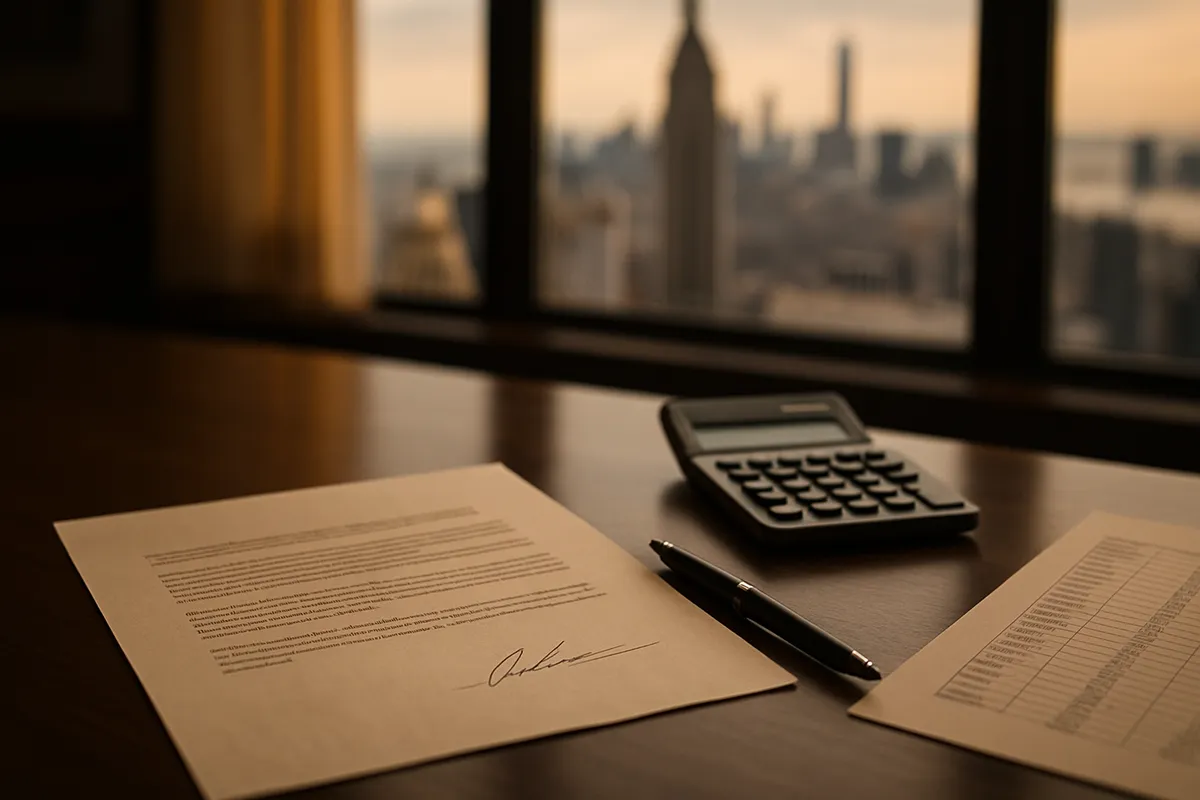

For businesses in New York, a commercial lease isn’t just a contract; it’s the foundation of their operations. As your lease term approaches its end, the process of New York commercial lease renewal can seem straightforward, perhaps even a mere formality. Many business owners, eager to maintain their location, might engage in informal discussions with their landlords, relying on verbal assurances or handshake agreements. However, this seemingly amicable approach harbors significant risks, especially when dealing with oral promises from a landlord.
In the complex landscape of New York real estate law, an unwritten agreement can quickly unravel, leaving your business vulnerable. This is precisely why the meticulous and aggressive legal counsel of a seasoned attorney like Jay Koo (구자욱) 변호사 is not just beneficial, but often indispensable. Jay Koo understands that your business’s future hinges on the clarity and enforceability of your lease agreement, and he is committed to protecting your interests with unwavering precision.
The Deceptive Simplicity of Oral Agreements in NY Commercial Leases
The allure of a quick, verbal agreement during a commercial lease renewal is understandable. It feels efficient, personal, and avoids the perceived hassle of legal review. Yet, in New York, this path is fraught with peril. What seems like a friendly understanding can transform into a costly dispute, jeopardizing your business’s stability and financial health.
Why Oral Promises Fall Short in New York Law
New York law, like that of many other states, places a high premium on written contracts, particularly concerning real estate. The primary legal principle at play here is the Statute of Frauds. This statute mandates that certain types of agreements, including those involving real property leases for terms longer than one year, must be in writing to be enforceable.
- Lack of Enforceability: An oral promise regarding a lease extension or new terms, if not reduced to writing and signed by both parties, is generally unenforceable in a New York court. This means if a landlord verbally agrees to a lower rent or a longer term, they can legally retract that promise at any time before a written agreement is executed.
- “He Said, She Said” Scenarios: Without a written record, any dispute over the terms of an oral agreement devolves into conflicting testimonies. Proving the existence and specific conditions of a verbal promise becomes incredibly challenging, often impossible, in a legal setting.
- Misinterpretation and Ambiguity: Verbal discussions are inherently prone to misinterpretation. What one party believes was agreed upon, the other might understand differently. A written contract eliminates this ambiguity by clearly defining all terms and conditions.

The Statute of Frauds and Commercial Leases
Specifically, New York General Obligations Law § 5-703, commonly known as the Statute of Frauds, requires that a contract for the leasing of real property for a period longer than one year must be in writing and subscribed by the party to be charged. This applies directly to commercial lease renewals. Any verbal agreement to renew a lease for more than a year, or to modify key terms of an existing lease for such a period, is likely unenforceable.
Common Scenarios Where Oral Promises Lead to Disaster
Consider these common pitfalls for New York businesses relying on verbal agreements:
- Rent Increases: A landlord verbally assures you of a minimal rent increase, only to present a significantly higher figure in the written renewal, or worse, demand market rate if no written agreement is in place.
- Repair Commitments: You’re promised that the landlord will undertake necessary repairs or improvements before renewal. Without it in writing, those promises often vanish, leaving you with unexpected expenses.
- Renewal Options: A verbal “option to renew” is worthless. If not explicitly detailed in the original lease or a new written agreement, your landlord is under no obligation to offer a renewal, potentially forcing your business to relocate.
- Holdover Tenancy: If your lease expires and you continue to occupy the premises without a new written agreement, you could become a “holdover tenant.” In New York, holdover tenants can face significant penalties, including paying double the previous rent, and can be evicted with minimal notice.
Jay Koo (구자욱) 변호사 emphasizes that any agreement concerning your commercial space must be documented. His firm meticulously reviews all communications and drafts robust agreements to prevent such devastating scenarios.
Essential Clauses to Scrutinize During Your Commercial Lease Renewal
Beyond the dangers of oral promises, a successful New York commercial lease renewal hinges on a thorough review of the written agreement. This is where the expertise of a New York commercial real estate attorney becomes invaluable. Jay Koo’s aggressive and detail-oriented approach ensures that every clause is scrutinized to protect your business’s long-term interests.
Here are the critical clauses that demand your utmost attention:
1. Lease Term and Renewal Options
- Clarity of Term: Ensure the new lease term is clearly defined (e.g., 5 years, 10 years).
- Future Renewal Options: If you desire further renewals, negotiate and explicitly include future renewal options, specifying the terms, notice periods, and rent calculation methods for those subsequent renewals. Don’t assume.
2. Rent Escalation and Operating Expenses (CAM)
- Base Rent: Understand the new base rent and any scheduled increases.
- Operating Expenses (CAM): For triple net (NNN) or modified gross leases, meticulously review how Common Area Maintenance (CAM), taxes, and insurance are calculated. Look for caps on controllable operating expenses and clear definitions of what constitutes CAM. Jay Koo will analyze historical CAM charges and negotiate limits to prevent unexpected cost surges.
3. Repair and Maintenance Responsibilities
- Tenant vs. Landlord: Clearly delineate who is responsible for structural repairs, HVAC systems, plumbing, electrical, and general maintenance. Ambiguity here can lead to substantial, unforeseen expenses.
- Capital Improvements: Clarify if the tenant is responsible for a pro-rata share of capital improvements, and if so, how these are defined and amortized.
4. Use Clause and Exclusivity
- Permitted Use: Ensure the “use clause” accurately reflects your current and future business operations.
- Exclusivity: If your business relies on being the sole provider of a specific service or product within the building or complex, negotiate an “exclusivity clause” to prevent competitors from leasing space nearby.
5. Assignment and Subletting Rights
- Flexibility for the Future: Understand your rights to assign the lease (transfer it to another business) or sublet a portion of your space. Most landlords require consent, but the clause should specify that consent cannot be “unreasonably withheld.” This is crucial for business sales or downsizing.
6. Default and Remedies
- Cure Periods: Review the “default clause” carefully. Ensure adequate “cure periods” are provided for both monetary and non-monetary defaults before the landlord can terminate the lease or pursue other remedies.
- Landlord’s Remedies: Understand the landlord’s rights upon default, including acceleration of rent or eviction procedures.
7. Personal Guarantees: A Silent Threat
- Individual Liability: Many commercial leases, especially for smaller businesses, require a “personal guarantee” from the business owner. This means you are personally liable for the lease obligations if your business defaults. Jay Koo will explore options to limit or remove personal guarantees, or at least cap your liability.
8. Holdover Provisions
- Penalties: If your business remains in the premises after the lease expires without a new agreement, the “holdover provision” dictates the penalties. These can be severe, often doubling or tripling the rent. A skilled attorney can negotiate more favorable holdover terms.
9. Alterations and Improvements
- Tenant Improvements: Clarify the process for making alterations or improvements to your space, including requirements for landlord consent and whether the improvements must be removed at the end of the term.
10. Dispute Resolution Mechanisms
- Mediation/Arbitration: Review how disputes will be resolved. Some leases mandate mediation or arbitration before litigation, which can be beneficial for cost and time savings.
Don’t Go It Alone: The Indispensable Role of a New York Commercial Lease Attorney
Navigating a New York commercial lease renewal is not merely a negotiation; it’s a strategic legal undertaking that can significantly impact your business’s longevity and profitability. The stakes are too high to rely on informal agreements or to overlook critical clauses.
Jay Koo (구자욱) 변호사 stands as a formidable ally for New York businesses. His aggressive and meticulous approach ensures that every aspect of your lease renewal is thoroughly examined, negotiated, and secured.
Negotiating Power and Expertise
Landlords often have sophisticated legal teams. Without equally strong representation, you are at a distinct disadvantage. Jay Koo brings:
- Deep Legal Knowledge: An intimate understanding of New York real estate and contract law.
- Negotiation Acumen: The ability to skillfully negotiate favorable terms, from rent and operating expenses to repair responsibilities and renewal options.
- Proactive Problem Solving: Identifying potential issues before they escalate into costly disputes.
Due Diligence and Risk Mitigation
Jay Koo’s commitment to strategic precision isn’t limited to commercial real estate; it’s a hallmark of his practice across all legal domains, ensuring clients receive meticulous attention, whether in business negotiations or personal injury claims. He conducts thorough due diligence, scrutinizing every line of the proposed lease to identify hidden liabilities, ambiguous language, and unfavorable terms. His goal is to mitigate risks and ensure your lease agreement serves your business, not just the landlord’s.
Protecting Your Business’s Future
Your commercial lease is a long-term commitment. A poorly negotiated or misunderstood renewal can shackle your business with unfavorable terms for years. Jay Koo (구자욱) 변호사 acts as your shield and sword, protecting your rights, securing your interests, and laying a solid legal foundation for your business’s continued success in New York.
Don’t let oral promises or complex legal jargon compromise your business’s future. If your New York commercial lease renewal is approaching, contact Jay Koo (구자욱) 변호사 today. His aggressive advocacy and meticulous attention to detail will ensure your rights are protected, and your business thrives. Secure your future with the unwavering expertise of a top New York commercial real estate attorney.