
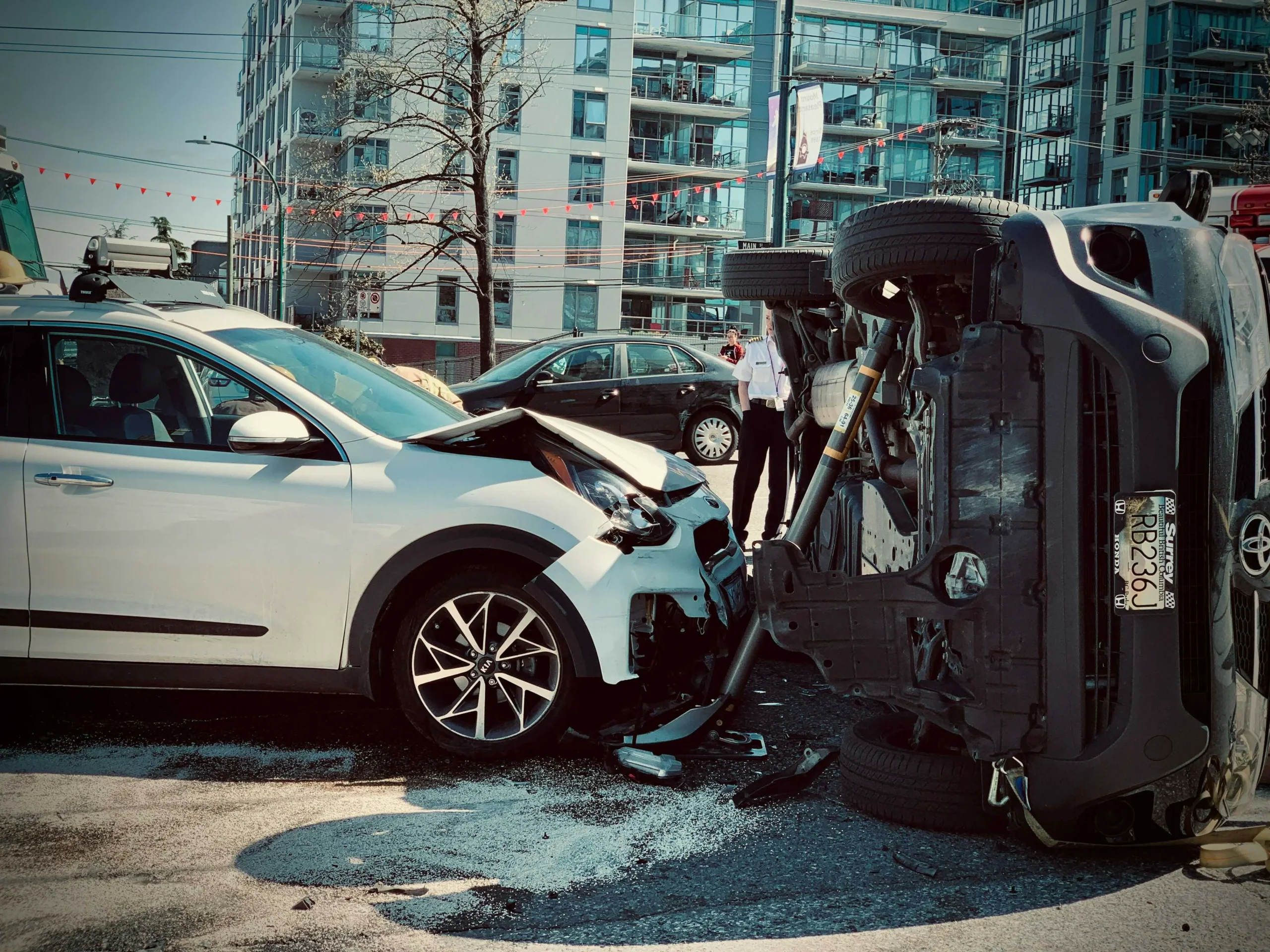
When handling car accident cases in Queens, there’s something I hear almost every day:
“Attorney, I understand that accidents happen here because the roads are so congested… but once the accident actually happened, I had no idea what I was supposed to do next.”
Queens is one of the most traffic-dense areas in New York City.
In neighborhoods like Jackson Heights, Flushing, and Elmhurst—where two-way traffic, heavy pedestrian flow, and cyclists all intersect—accidents range widely, from sudden intersection collisions to rear-end crashes and right-turn accidents.
Many people assume that because a crash happened at low speed on a local road, the compensation will be minimal. But based on the cases I’ve actually handled, that assumption is often wrong.
The accident itself may be over in seconds, but what follows is an entirely different reality.
Insurance companies may sound polite and cooperative, but their primary objective is to minimize how much they pay out on your claim.
After years of focusing exclusively on car accident cases in Queens, this is a reality I’ve seen again and again as a car accident lawyer.
In this article, I want to walk you through the most common mistakes people make after an accident in Queens—and, more importantly, what you can do to avoid being placed at a disadvantage from the very beginning.

1) What you document at the scene immediately after an accident can largely determine your settlement.
When you look at accident scenes in Queens, there’s a common pattern: narrow roads, heavy traffic, and constant activity all around. Because of this, many people instinctively think, “Let’s just move the cars out of the way first.” And that’s often the moment when critical evidence is lost.
There are four key records that should be secured as soon as possible after an accident:
-
Scene photos: damage to both vehicles, the position of the other car, traffic signals, and lane layout
-
Police report: making sure you obtain the incident or report number
-
Same-day medical records: whether you visited the ER or an urgent care clinic
-
Pain documentation within 72 hours: visits to an orthopedist or physical therapist
During consultations in Queens, I hear this all the time:
“I felt fine right after the accident… but a few days later, the pain got much worse.”
This does not automatically put your case at a disadvantage.
However, when there is no same-day documentation, it becomes harder to counter the arguments insurance companies often use. In those situations, more evidence is needed to protect your claim.
That’s why, as a car accident lawyer, I always give the same advice to people who contact me right after a crash:
“Even if your body feels okay right now, make sure the records are created.”
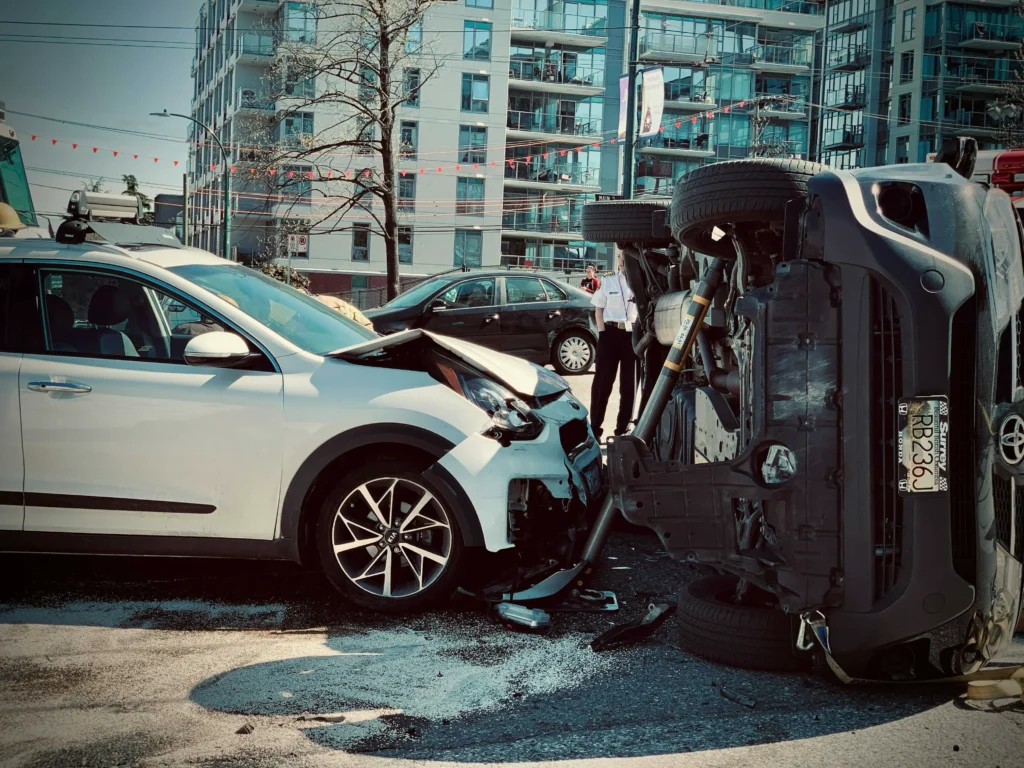
2) Insurance companies tend to rely on three core arguments, and in Queens, these are applied especially aggressively.
Because of the local driving conditions in Queens, insurers repeatedly fall back on the same lines of defense.
First is the Low Impact Defense — the claim that the collision was too minor to cause real injury. In neighborhoods like Flushing, Corona, and Woodside, slow-moving traffic leads to frequent low-speed crashes, and insurers often argue, “The damage is minimal, so the injury must be minimal too.”
In real cases, however, vehicle damage and physical trauma are not the same thing. When MRI findings and pain patterns are properly documented, this argument can be effectively challenged.
Second is the pre-existing injury argument. Insurers closely scrutinize whether you’ve had prior neck or back pain. But by comparing your functional abilities before and after the accident, it’s often possible to show that the collision aggravated or worsened the condition.
Third is comparative negligence. On Queens side streets, two-way one-way roads, and right-turn lanes, fault is often unclear. When a car accident lawyer takes on a case, police reports, accident footage, CCTV, and even street view images are gathered to reconstruct what actually happened. Through this process, there have been many cases where fault was reduced to less than half — or even shifted more heavily onto the other party.

3) If you are currently speaking with the insurance company, do not answer even a single question casually
In Queens, many people view car accidents as “minor issues.” But insurance adjusters often ask questions in a way that subtly leads your answers.
“You weren’t in pain right away, correct?”
“You’ve had some back discomfort before, haven’t you?”
The moment you answer “yes” to questions like these, the direction of your case can change entirely.
That’s why a car accident lawyer will usually advise you to explain your situation first — before speaking directly with the insurance company.
4) No matter where you are right now, we help you make the best possible decision at this stage
Even if several days have already passed since the accident, it’s not too late.
Even if there were no photos taken at the scene, there are still ways forward.
Even if you haven’t had an MRI yet, a clear direction can still be established.
What matters most is knowing exactly what needs to be prepared first, starting now.
In Queens, the cases handled every day are typically evaluated based on four core factors:
-
Severity of the injury
-
Length of treatment
-
Whether there are lasting or long-term effects
-
Limitations on daily life and work
How records are built over time, when negotiations begin, and which materials are submitted — these decisions are where a car accident lawyer’s judgment directly impacts the final settlement amount.

5) Why Jay Koo Is Chosen in Queens — It’s About How the Case Is Built
After reviewing hundreds of cases in Queens alone, the approach here goes beyond simply processing paperwork. Each case is built by designing its structure from the ground up.
That includes:
-
A deep understanding of local road layouts and traffic patterns
-
Analyzing the specific arguments each insurance company tends to use
-
Organizing medical records and evidence along a clear timeline
-
Determining the right moment to enter settlement negotiations
-
Identifying and addressing potential weaknesses early on
When this process is done correctly, even a seemingly minor accident can lead to a meaningful outcome.
Tell me where you are in the process, and I’ll help you assess your situation right away
Whether you’re reaching out immediately after the accident or you’ve already received an offer from the insurance company, there are clear ways I can help.
If you briefly share your current situation, I’ll explain the key points of your case and outline exactly what should be prepared next.