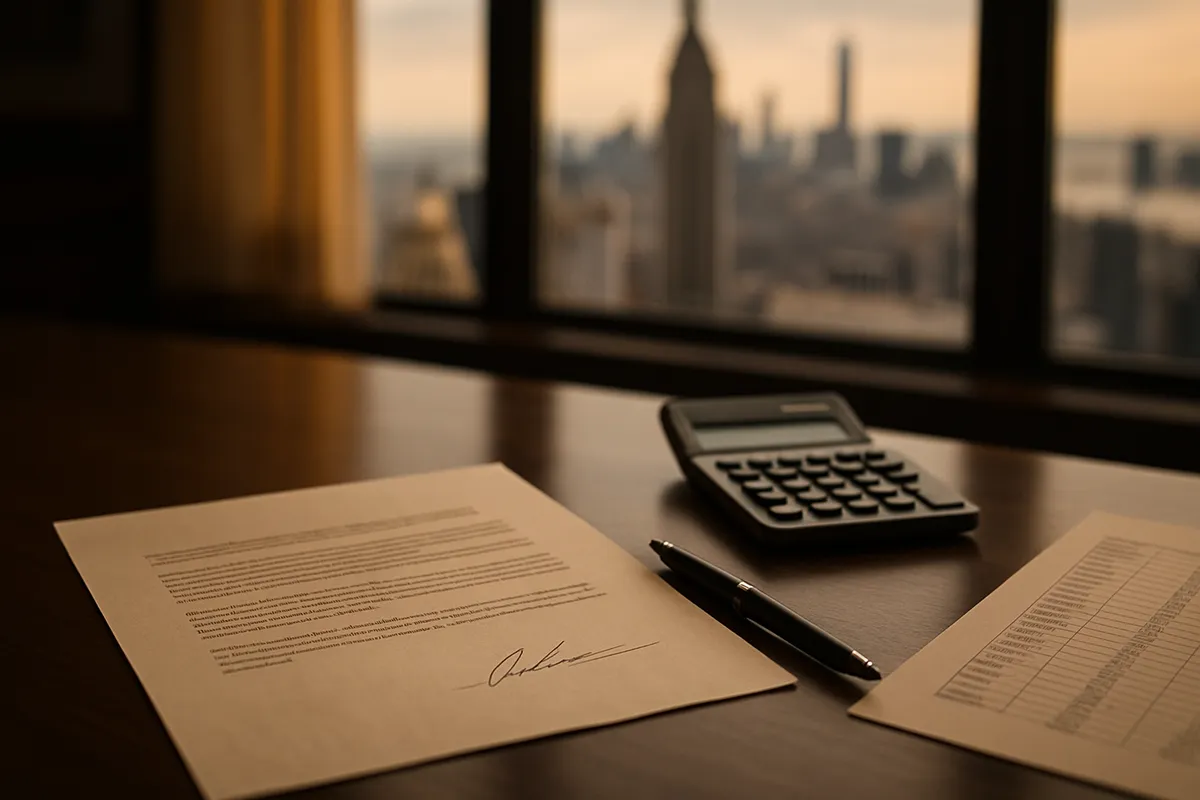

Opening a restaurant or retail storefront in Manhattan is a monumental achievement. The foot traffic, the prestige, and the dynamic consumer base offer unparalleled opportunities for business growth. However, the Manhattan commercial real estate market is notoriously unforgiving. In an era defined by rapid economic fluctuations, shifting consumer habits, and unpredictable inflation, signing a standard commercial lease without aggressive negotiation is a gamble that business owners simply cannot afford to take.
For restaurateurs and retail operators, the lease agreement is the foundational document that will either support your business through tough times or accelerate its downfall. Landlords in New York City utilize highly sophisticated, landlord-friendly lease templates designed to shift nearly all financial risks onto the tenant. To survive and thrive, you must proactively build a fortress around your business by integrating defensive lease clauses tailored to economic volatility.

The Hidden Dangers of Standard New York Commercial Leases
When a landlord presents a “standard” commercial lease, it is critical to understand that there is nothing standard about it from a tenant’s perspective. These documents are meticulously crafted by the landlord’s legal team to ensure uninterrupted cash flow, regardless of what happens to your business or the broader economy.
If foot traffic plummets due to a localized economic downturn, if supply chain issues delay your build-out, or if inflation causes building maintenance costs to skyrocket, a standard lease offers no mercy. You are legally bound to pay the rent, the taxes, and the operating expenses. Furthermore, landlords may make verbal promises during negotiations regarding space build-outs or rent concessions. However, as discussed in our comprehensive guide on Fraud and Breach of Contract in New York, oral agreements are notoriously difficult to enforce and often fail to protect you when formal disputes arise. Everything must be codified in the written lease.
To protect your investment, you must shift from a passive signer to an active negotiator. Below are the critical defensive clauses every Manhattan restaurant and retail tenant must secure.
Crucial Defensive Lease Clauses for Economic Fluctuations

1. The “Good Guy Guarantee” (GGG) – Tailoring Your Exit Strategy
In New York commercial real estate, landlords almost always require a personal guarantee. However, a full personal guarantee means your personal assets (your home, your savings) are on the line for the entire duration of the lease if your business fails.
The compromise is the Good Guy Guarantee (GGG). A GGG limits your personal liability, provided you are a “good guy” who surrenders the keys and vacates the premises in good condition, leaving no rent arrears up to the date of surrender.
Defensive Strategy:
* Notice Periods: Landlords often demand a 6-month to 12-month notice period before you can exercise a GGG. If your business is failing, bleeding cash for another year is impossible. You must aggressively negotiate this notice period down to 60 or 90 days.
* Security Deposit Application: Ensure the lease allows your security deposit to be applied to the final months of rent during the GGG notice period, preserving your liquid capital when you need it most.
2. Force Majeure and Rent Abatement Clauses
The pandemic exposed a massive vulnerability in standard commercial leases: Force Majeure (Act of God) clauses traditionally excused landlords from providing services during emergencies but did not excuse tenants from paying rent.
Defensive Strategy:
* Broadening the Definition: Ensure the clause explicitly includes public health emergencies, government-mandated shutdowns, and severe supply chain disruptions.
* Rent Abatement: Negotiate a provision stating that if you are legally prohibited from operating your business (e.g., a government lockdown) or if the landlord cannot provide essential services (water, electricity) for a continuous period, your obligation to pay base rent is proportionally abated (reduced or paused) until you can resume normal operations.
3. Co-Tenancy Clauses for Retail Spaces
If you are opening a retail store in a mixed-use building or a shopping center, your business likely relies on the foot traffic generated by an “anchor tenant” (e.g., a major grocery store, a popular department store, or a high-profile gym). If that anchor tenant goes bankrupt or relocates due to economic shifts, your sales could plummet.
Defensive Strategy:
* A Co-Tenancy Clause gives you the right to demand a significant reduction in rent, transition to a percentage-rent-only structure, or even terminate the lease entirely if the anchor tenant leaves and the landlord fails to replace them with a comparable business within a specified timeframe.
4. Capping Common Area Maintenance (CAM) and Real Estate Tax Escalations
In a standard Triple Net (NNN) lease, the tenant is responsible for their pro-rata share of the building’s real estate taxes, insurance, and Common Area Maintenance (CAM) charges. During periods of high inflation, landlords pass the surging costs of building repairs, security, and unionized labor directly to the tenants.
Defensive Strategy:
* Controllable vs. Uncontrollable Costs: Differentiate between costs the landlord can control (management fees, routine maintenance) and those they cannot (property taxes, insurance).
* Negotiating a Cap: Demand a strict annual cap (e.g., 3% to 5%) on the increase of controllable CAM charges. This prevents a landlord from undertaking massive, unnecessary building renovations and forcing your small business to foot the bill.
* Base Year Adjustments: Ensure your “Base Year” for tax escalations is set accurately. If you sign a lease in a year where the building is not fully assessed, you could face a massive, unexpected tax bill the following year.
5. Assignment and Subletting Rights
Economic fluctuations require business agility. You may need to sell your restaurant, bring in a new corporate partner, or sublet a portion of your retail space to survive. Standard leases usually state that assignment or subletting is at the landlord’s “sole and absolute discretion,” meaning they can say no for any reason.
Defensive Strategy:
* Reasonable Consent: The lease must state that the landlord’s consent to an assignment or sublet “shall not be unreasonably withheld, conditioned, or delayed.”
* Permitted Transfers: Negotiate a “Permitted Transfer” clause that allows you to transfer the lease to an affiliate company, a franchisee, or a buyer of your business without needing the landlord’s prior consent, provided the new entity meets certain financial benchmarks.
6. Percentage Rent Structures for Restaurants
For Manhattan restaurants, fixed base rents can be a death sentence during the slow winter months or sudden economic downturns.
Defensive Strategy:
* Negotiate a Percentage Rent structure where the base rent is lowered, but the landlord receives a percentage of your gross sales once they exceed a certain threshold (the “natural breakpoint”). This aligns the landlord’s interests with yours; if the economy dips and your sales drop, your rent burden decreases, allowing the business to survive the storm.
The Importance of Build-Out and Permitting Contingencies
Before you can serve a single customer, you must navigate New York City’s labyrinthine bureaucracy. Obtaining a liquor license from the State Liquor Authority (SLA) or construction permits from the Department of Buildings (DOB) can take months longer than anticipated.
If your lease dictates that rent commences on a specific date regardless of your permit status, you could be paying tens of thousands of dollars for an empty, non-operational space.
Defensive Strategy:
* Rent Commencement Contingencies: Tie the rent commencement date to the successful acquisition of essential permits.
* Landlord Delivery Conditions: Ensure the landlord is penalized (via free rent days) if they fail to deliver the space to you on time and in the exact condition promised in the lease.
Note: Comprehensive business protection goes beyond the lease. If your restaurant or retail operation relies heavily on delivery services to combat fluctuating in-store foot traffic, managing operational liabilities—such as navigating delivery truck accidents and complex litigation—is just as critical as securing your physical space.
Why You Need an Aggressive New York Commercial Lease Attorney
Commercial landlords in Manhattan do not negotiate out of the goodness of their hearts. They concede points only when faced with a tenant who is backed by formidable, meticulous legal representation. Attempting to negotiate a commercial lease on your own, or using an attorney who does not specialize in the aggressive realities of New York commercial real estate, leaves you exposed to devastating financial liabilities.
You need a legal advocate who understands the nuances of the local market, anticipates economic shifts, and dissects every single line of a 100-page lease agreement to find the hidden traps.
Jay Koo (구자욱) is recognized for his relentless and strategic approach to commercial litigation and real estate law in New York. Representing Korean-American entrepreneurs, local restaurateurs, and retail business owners, Attorney Jay Koo does not just review leases—he engineers them to serve as a shield for your business. By anticipating worst-case scenarios and demanding equitable terms, he ensures that your rights are fiercely protected against even the most powerful Manhattan landlords.
Do not let an unfair lease dictate the future of your business. Before you sign a letter of intent or a commercial lease agreement, secure the maximum legal protection available. Contact Jay Koo Law today to ensure your Manhattan commercial lease is built to withstand any economic fluctuation.