The short version
- If a car hits you while you’re on a bicycle, that driver’s No-Fault coverage generally pays your first medical bills and lost wages. A cyclist without any auto policy of their own can still be a covered person under the No-Fault benefits of the vehicle that struck them. That’s a key difference from a car-versus-car crash.
- An e-bike or e-scooter is neither a plain bicycle nor a registered car — it’s a separate category. New York’s Vehicle and Traffic Law sorts e-bikes into Class 1, 2, and 3, and treats e-scooters separately. That classification can change whether No-Fault applies, so pin down exactly what you were riding.
- Your own share of fault does not erase your claim. New York follows pure comparative negligence (CPLR §1411): your recovery is reduced by your percentage of fault, but it is never barred outright.
- To recover pain and suffering from the driver, you must clear the “serious injury” threshold. Insurance Law §5102(d) sets the bar — fracture, permanent loss of use, significant limitation, and similar categories — before a claim goes beyond No-Fault into a liability lawsuit.
- A hit-and-run or an uninsured driver doesn’t end the road. You may turn to your own (or a resident relative’s) uninsured/underinsured motorist coverage (UM/SUM), or to New York’s MVAIC when no auto policy exists in the household.
- Miss the deadline and the case closes. A personal injury claim against an individual runs three years from the crash (CPLR §214), but if a city’s road or property defect is involved, a separate 90-day notice of claim applies (General Municipal Law §50-e).
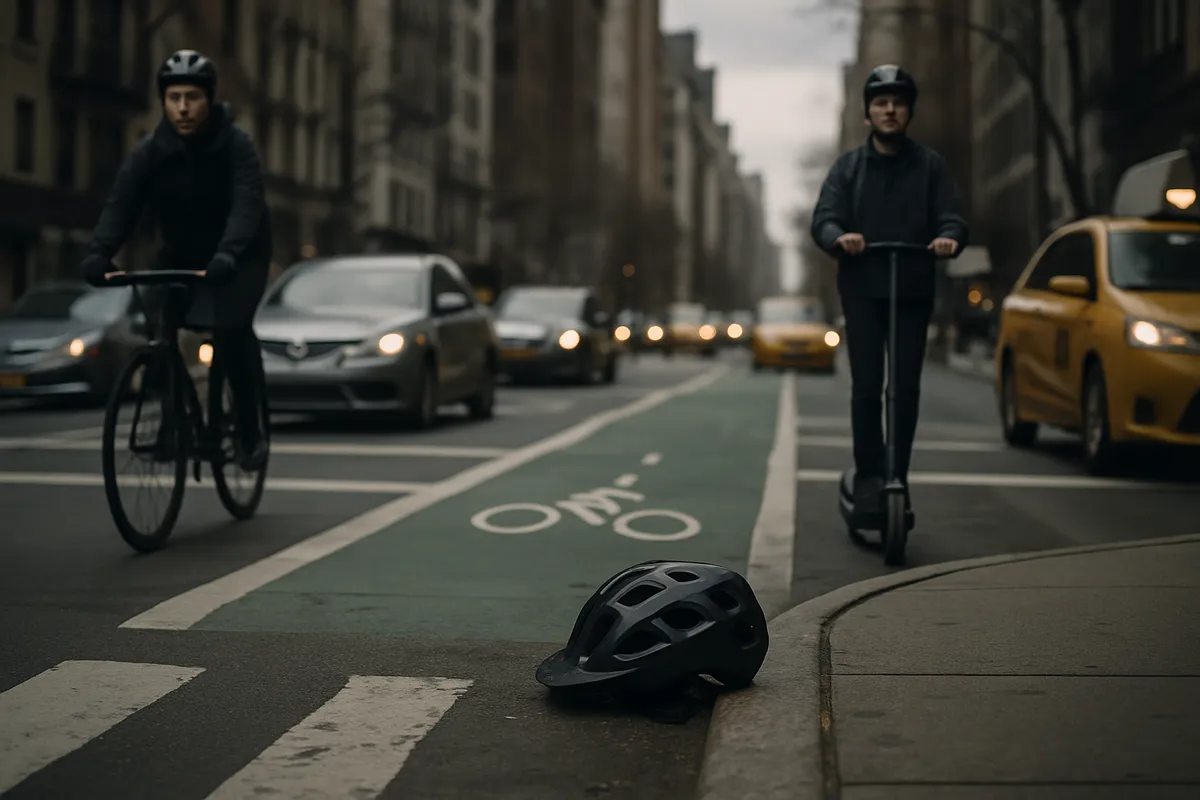
You’re riding home through the bike lane, or weaving through delivery traffic on an e-scooter, and a car turns into you. In the ER, the questions pile up fast: “I don’t even have car insurance — who pays for this? I rolled through a light, so am I getting nothing? And that driver just took off.” Bad information at this moment is how injured riders talk themselves out of money they’re owed. In New York, a bicycle or e-bike crash runs on different insurance and fault rules than a car accident. Jay Koo lays out those differences, and what you have to lock down right after the crash.
How is a New York bicycle or e-scooter crash different from a car accident?
The two biggest differences are how you get into insurance coverage and how fault gets fought. Two cars each start with their own No-Fault policy; a cyclist or e-scooter rider usually has no vehicle policy of their own, so the whole claim structure shifts.
A rider takes the hit with a helmet and not much else against a two-ton vehicle. The injuries run more severe for the same impact, and the liability fight tends to open with “the cyclist was riding recklessly.” In practice, insurers reach for rider fault faster in these cases than in almost any car claim.
- Different entry point: a driver starts with their own No-Fault; a cyclist enters through the striking vehicle’s No-Fault.
- Injury severity: with little protection, head trauma and fractures are more common.
- The fault frame: the other side leans hard on light-running, wrong-way riding, or darting into traffic.
- The classification wrinkle: electric devices add a separate “is it a bicycle or a vehicle” question.
Two wheels put this in the same family as how a motorcycle crash raises legal issues a car crash doesn’t, but a motorcycle is a registered, insured vehicle while a bicycle or e-scooter is not — and that split changes the entire compensation plan.
Can I get No-Fault benefits if a car hit me while I was on a bicycle?
Yes. When a car strikes a cyclist, the striking vehicle’s No-Fault coverage generally pays first for medical bills, lost earnings, and other basic economic loss. You can access that coverage before anyone argues about fault, even without an auto policy of your own.
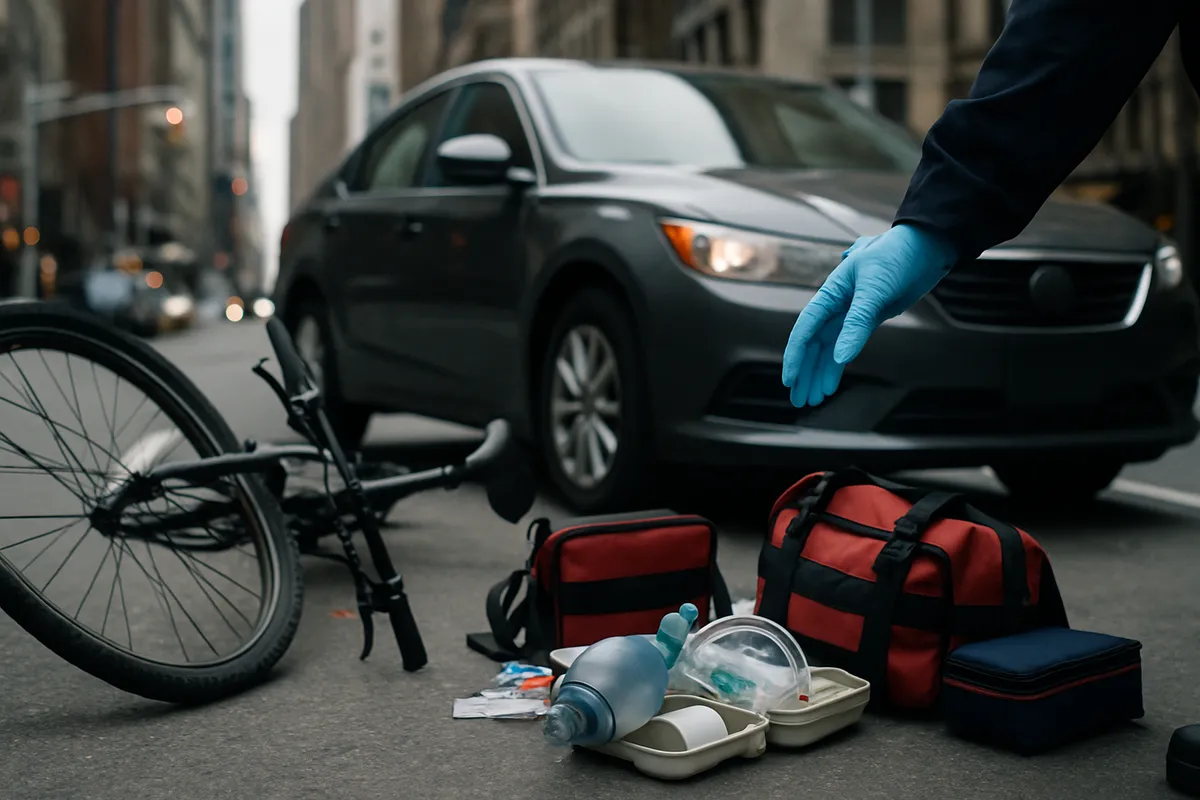
New York’s No-Fault system (Insurance Law Article 51) is built to pay medical and wage loss up front, regardless of who caused the crash. In a car-on-car collision each driver draws from their own policy; a cyclist has no such policy, so the striking vehicle’s insurer stands in that place. Get into it late and treatment stalls, records develop gaps, and the later negotiation suffers for it.
Watch the device classification. A standard pedal bicycle fits this structure fairly cleanly, but an e-scooter or e-bike may be treated differently depending on the machine. That’s why it matters to record exactly what you were riding — make, model, top speed, class.
- Pedal bicycle: commonly a covered person under the striking vehicle’s No-Fault.
- Electric device: coverage can turn on the classification, so confirm the facts rather than assume.
- What it covers: reasonable medical care, lost wages, and related necessary expenses as basic economic loss.
Pain that feels minor on the day of the crash often surfaces days later. As covered in why symptoms that show up days after a New York crash still belong in your No-Fault claim, skipping early treatment hands the insurer its favorite argument: that the pain has nothing to do with the accident.
Is an e-bike or e-scooter legally a car or a bicycle?
Neither. New York legalized electric bicycles and e-scooters as their own categories, and it splits e-bikes into Class 1, 2, and 3 by top speed and how the motor engages. That classification drives insurance, liability, and where you’re allowed to ride.
The core point: these machines are not registered, insured “motor vehicles,” but they aren’t identical to a plain bicycle either. The class changes which roads you can use, what helmet rules apply, and how a crash gets handled for insurance.
| Device class | Rough profile | What it means in practice |
|---|---|---|
| Class 1 e-bike | Motor assists only while pedaling, lower speed | Treated closest to a bicycle |
| Class 2 e-bike | Throttle can drive it without pedaling, lower speed | The throttle draws liability arguments |
| Class 3 e-bike | Higher permitted speed, largely limited to New York City | Higher speed sharpens fault and helmet fights |
| E-scooter | Separate category, with location and age limits | No-Fault access is especially unsettled here |
If you were riding a delivery e-bike on the job, a workers’ compensation claim may open a second track alongside any auto or third-party claim, and the analysis gets layered. Wave off the classification and you can lose an entire avenue of coverage you never knew you had. That’s why Jay Koo starts a crash consult by nailing down exactly what you were riding.
If I wasn’t wearing a helmet or I ran a light, am I shut out?
No. New York uses pure comparative negligence, so a rider’s own fault only shrinks the recovery by that percentage — it does not wipe out the claim (CPLR §1411). Even substantial fault leaves the rest of the recovery on the table.
Say a case with a large damages figure comes back with some share of rider fault: the award drops by that percentage and no more. Whether your fault is 30% or 60%, it does not become zero. That’s the sharp line between New York and states where even a sliver of fault can bar recovery.
Helmet use gets handled in the same frame. Certain ages and device types are required by law to wear one, but not wearing a helmet doesn’t, by itself, close the door on a claim. The other side will still drag it in as a comparative negligence argument to cut the number down. So in that fight, the strength of your evidence is what protects the dollar figure.
- Pure comparative negligence: recovery is reduced by your fault share; the claim survives.
- Helmet and light-running: usable to reduce damages, but not to bar the case.
- How you push back: dashcam, CCTV, witnesses, and scene photos that establish the driver’s fault.
How a fault percentage moves the money works the same way it does in New York crosswalk pedestrian cases and comparative negligence. Pedestrian or cyclist, the more you’re cast as the vulnerable party on the road, the more the case turns on stripping away the “you should have been more careful” frame.
Where do I recover if the driver was uninsured or fled the scene?
Even after a hit-and-run or against an uninsured driver, a path remains. If you or a resident relative carry auto insurance, that policy’s uninsured/underinsured (UM/SUM) coverage may apply; if no household auto policy exists, New York’s MVAIC is the route. A situation that looks like a dead end usually isn’t, if the procedure is followed.
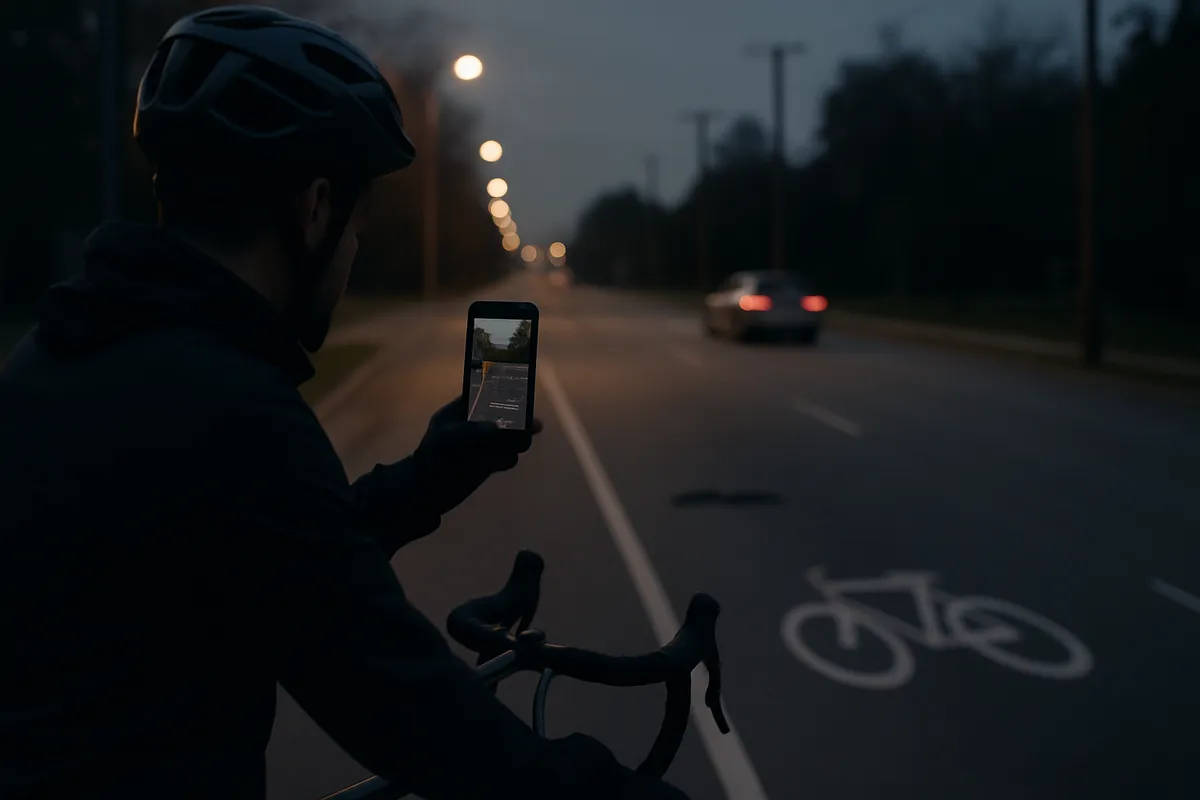
Here’s where riders get tripped up. “It wasn’t my car — what does my auto policy have to do with it?” But if you or a relative you live with hold auto insurance, that UM/SUM coverage can reach a bicycle crash. If there’s no auto policy anywhere in the household, the MVAIC exists for uninsured and hit-and-run victims — with strict eligibility and filing deadlines.
- UM/SUM: on your own or a resident relative’s auto policy, may apply to a bike crash.
- MVAIC: New York’s mechanism for uninsured and hit-and-run victims with no household auto coverage; deadlines are tight.
- Shared must-do: call the police immediately (get the report) and capture the fleeing vehicle’s plate, make, and direction.
The step-by-step for uninsured and hit-and-run situations is laid out in how UM/SUM coverage pays after a New York hit-and-run. Being on a bike doesn’t close that door — remembering that is what keeps a hopeless-looking crash moving forward.
By when — and with what — do I have to file a bicycle accident claim?
A personal injury claim against an individual driver or owner runs three years from the crash (CPLR §214). But if a public entity’s road or property defect is involved, a much shorter 90-day notice of claim applies (General Municipal Law §50-e). Miss that 90 days and the claim against the public entity can be lost entirely.
Just as important as the deadline is early evidence. Bicycle and e-scooter crashes tend to leave thinner physical proof than car crashes, so what you preserve at the scene decides the negotiation months later.
| When | What to do | Why |
|---|---|---|
| At the scene | Call 911, get the police report, photograph the scene, injuries, and device | Objective record of fault and the crash itself |
| Same day to a few days | Get medical care and records | The starting point for No-Fault payment and injury causation |
| Within 90 days | Consider a notice of claim if a public entity is involved | Protects the deadline for claims against a city or the state |
| Within 3 years | File the injury suit against an individual | Protects the statute of limitations |
One pattern common in New York City is dooring — a parked car’s door swings open and a cyclist slams into it — where the person who opened the door is on the hook. In those cases the door’s position, whether there was a bike lane, and how the car was stopped drive the fault call. Fail to capture that evidence early and the other side claims you “came out of nowhere” to flip responsibility. Jay Koo walks clients through that evidence checklist first thing after a crash.
Frequently asked questions
Q. I don’t have any auto insurance. If a car hits me on my bike, who pays for treatment?
As a rule, you claim first from the striking vehicle’s No-Fault coverage for medical bills and lost wages as basic economic loss. A cyclist is often a covered person under that policy even without any auto insurance of their own. For an e-scooter or e-bike, coverage can depend on the device classification, so it needs to be checked.
Q. Does an e-scooter get treated like a bicycle?
An e-scooter is a separate category from a pedal bicycle, and No-Fault access is especially unsettled for it. Treatment can turn on the device type, top speed, and class, so record exactly what you were riding and have the situation reviewed as its own case.
Q. I rolled through a light or wasn’t wearing a helmet. Can I still recover?
Yes. New York applies pure comparative negligence, so your recovery is only reduced by your share of fault — the claim isn’t barred (CPLR §1411). The other side will use it to cut the number, so dashcam footage, CCTV, and witness accounts that establish the driver’s fault matter.
Q. What do I need to pursue pain and suffering against the driver?
To go beyond No-Fault into non-economic damages, you must meet the serious injury threshold in Insurance Law §5102(d) — categories like fracture, permanent loss of use, or significant limitation — and prove it with the medical records.
Q. It was a hit-and-run and I have no car and no insurance. Any options?
If a relative you live with has auto insurance, their UM/SUM coverage may apply; if no household auto policy exists, you can look at a New York MVAIC claim. Both depend on a police report and strict filing deadlines, so report immediately and get advice quickly.
Too many bicycle and e-scooter cases end in a shrug — “I have no car and no insurance, so there’s nothing to get.” In reality, layered paths stay open: the striking vehicle’s No-Fault, your own or a relative’s UM/SUM, MVAIC, and the comparative negligence rule that keeps the claim alive. What matters is recording the device and the evidence right after the crash and building the case before a deadline runs. Jay Koo strips away the frame that casts riders as the reckless party on the road and pushes every open avenue to the end so an injured client keeps what they’re owed.