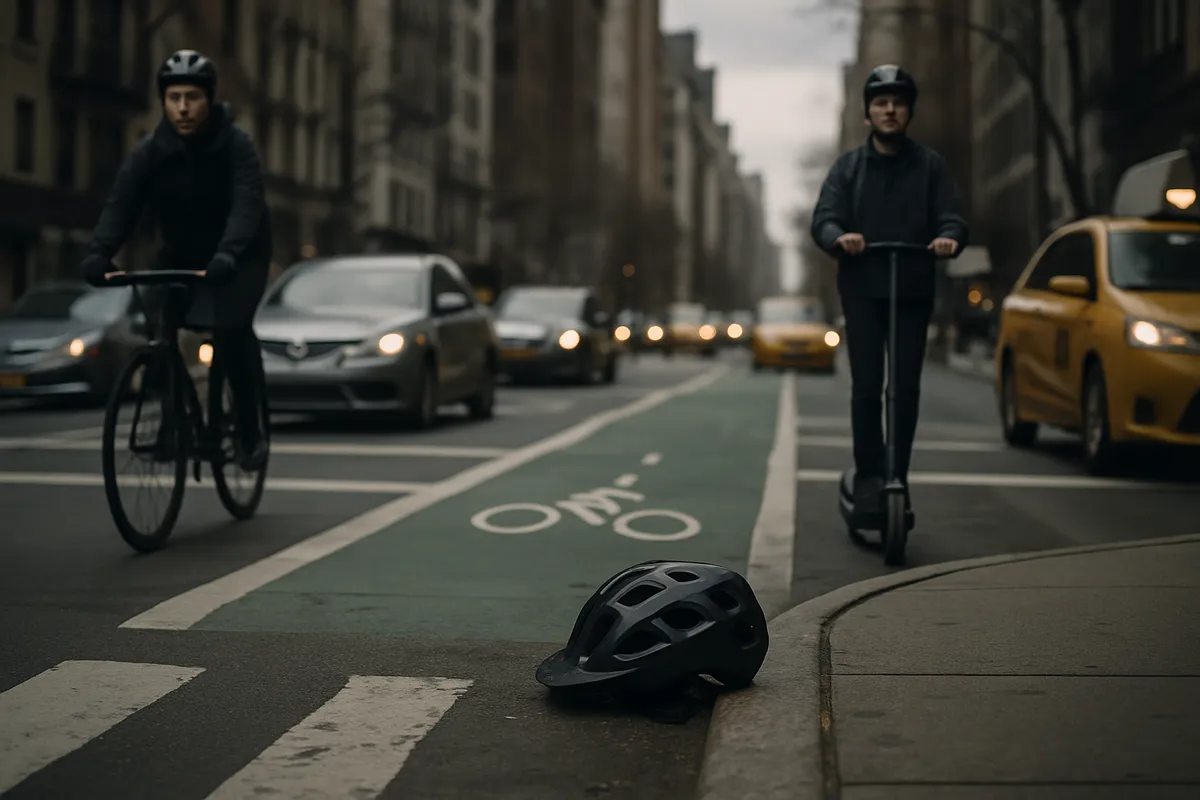

The screeching of tires, the shattering of glass, and the terrifying jolt of multiple impacts—being involved in a multi-car pileup on a busy New York highway like the BQE or I-495 is a nightmare. However, the chaos of the crash scene is often just the beginning. The real battle begins days later when multiple insurance companies start pointing fingers, desperately trying to shift the blame away from their policyholders.
In a standard two-car collision, determining fault is usually straightforward. But when three, four, or even ten vehicles are involved in a chain-reaction crash, the legal and investigative landscape becomes incredibly complex. If liability is not clearly and accurately established, you could be held responsible for damages you did not cause, or your legitimate claim for injuries could be unjustly denied.
In these high-stakes scenarios, one document holds absolute power over the trajectory of your case: the Police Report. Understanding how liability is dissected in multi-vehicle accidents and recognizing the overwhelming influence of the official police narrative is crucial to protecting your right to the maximum legal compensation.
The Chaos of Chain-Reaction Crashes: Who is to Blame?
Multi-car pileups typically fall into two categories: the “domino effect” (where one rear-end collision pushes a car into the next) and complex, multi-directional impacts caused by sudden stops, weather conditions, or reckless lane changes.
Insurance companies will aggressively investigate the sequence of impacts. They are looking for the proximate cause of the accident.
- The First Impact: Often, the driver who initiated the first collision bears the majority of the liability. If Driver A rear-ends Driver B, pushing Driver B into Driver C, Driver A is typically held responsible for the entire chain of events.
- Independent Negligence: What if Driver B was following Driver C too closely before Driver A even entered the picture? In New York, the law applies a Pure Comparative Negligence standard. This means that fault can be divided among multiple parties. If a jury determines you were 10% at fault for stopping abruptly, your total compensation will be reduced by 10%.
- Commercial Vehicle Involvement: The complexity skyrockets when commercial entities are involved. A pileup caused by a massive commercial truck requires navigating federal regulations and corporate insurance policies. If your accident involved a delivery vehicle, you are immediately thrust into complex litigation involving delivery trucks, where corporate defense teams will fight ruthlessly to minimize their liability. Similarly, if the crash involved Uber or rideshare vehicles, untangling the overlapping insurance policies requires meticulous legal strategy.
The Absolute Power of the Police Report (MV-104A)
When insurance adjusters receive notice of a multi-car pileup, the very first piece of evidence they demand is the official New York State Police Report (Form MV-104A). In the initial stages of a claim, the police report is treated as the absolute truth.
Why does this single document carry so much weight?
- The Official Narrative: The responding officer acts as an impartial third party. Their diagram of the crash scene, documentation of vehicle resting positions, and notes on weather and road conditions form the foundational narrative of the accident.
- Witness Statements: The report captures the immediate, on-the-scene statements of drivers and independent witnesses before memories fade or stories are manipulated by insurance representatives.
- Citations and Violations: If the officer issues a traffic ticket to a specific driver (e.g., for following too closely, speeding, or reckless driving), it creates a powerful presumption of negligence against that driver.
- Contributing Factors: Officers use specific codes on the MV-104A to indicate contributing factors like “Driver Inattention,” “Alcohol Involvement,” or “Unsafe Speed.” Insurance companies use these codes to instantly assign or deny liability.
If the police report accurately reflects that you were an innocent victim in a chain-reaction crash, it paves the way for a strong compensation claim. But what happens if the report is wrong?

How to Protect Your Claim if the Police Report is Inaccurate
In the chaotic aftermath of a multi-car pileup, responding officers are primarily focused on securing the scene and attending to the injured. They are not accident reconstruction experts, and mistakes happen. An officer might misunderstand a witness, fail to interview you because you were being loaded into an ambulance, or draw an inaccurate diagram of the vehicle impacts.
An inaccurate police report is a weapon that insurance companies will gladly use against you. If you find yourself in this situation, immediate and aggressive action is required:
- Do Not Give a Recorded Statement: Insurance adjusters will call you, acting friendly, hoping you will say something that aligns with the flawed police report. Decline to provide a recorded statement until you have legal representation.
- Gather Supplemental Evidence: To challenge a police report, you need overwhelming contradictory evidence. This includes securing nearby surveillance footage, obtaining dashcam video from other drivers, and extracting Event Data Recorder (EDR) “black box” data from the vehicles involved.
- Amending the Report: In some cases, a factual error (like an incorrect license plate or a misspelled name) can be easily amended. However, changing the officer’s narrative or fault determination requires a highly skilled attorney to present compelling new evidence to the precinct.
Why You Need an Aggressive New York Auto Accident Attorney
Navigating the aftermath of a multi-car pileup is not a DIY project. The insurance companies have teams of investigators and lawyers working tirelessly to protect their profit margins. You need a legal advocate who is equally relentless and deeply understands the nuances of New York traffic laws.
Attorney Jay Koo (구자욱 변호사) is recognized throughout New York as a premier legal strategist in complex auto accident litigation. Serving the local and Korean-American communities with unwavering dedication, Attorney Koo does not simply accept the insurance company’s initial findings or a flawed police report.
By employing top-tier accident reconstruction experts, meticulously analyzing every line of the MV-104A, and aggressively pursuing hidden evidence, Attorney Jay Koo dismantles the defense’s arguments. He positions his clients to secure the maximum legal compensation available for their medical bills, lost wages, and pain and suffering.
If you have been injured in a multi-car pileup, do not let the confusion of the crash or an inaccurate police report dictate your future. Protect your rights by securing the most formidable legal representation available.