The short version
- A drunk driving crash carries different legal weight than an ordinary fender-bender. When the driver’s recklessness is clear, punitive damages can sit on top of your regular compensation.
- No-Fault pays your basic medical bills and lost wages, and stops there. You can only pursue the driver directly once your injury crosses the serious injury threshold (Insurance Law §5102(d)).
- Liability doesn’t end with the driver. A bar or restaurant that kept serving a visibly intoxicated person can be pulled in under New York’s Dram Shop Act (General Obligations Law §11-101).
- The first few days decide the size of your claim. BAC records and scene evidence disappear fast.
Most people who get hit by a drunk driver say the same thing in my office: “The insurance company will handle it, right?” They wait a few weeks on that assumption, and half of what they could have recovered quietly slips away. A DUI crash isn’t a paperwork exchange between two insurers. It pulls in the driver’s criminal exposure, the gaps in the insurance, and sometimes the business that poured the last drink.
Why is a drunk driving crash worth more than an ordinary accident?
Because the at-fault driver’s recklessness is baked in from the start. An ordinary collision turns on who was careless. Getting behind the wheel drunk is a different category of conduct, and that opens the door to punitive damages on top of the money that covers your actual losses.
In a routine accident, the fight is about percentages of fault. A DUI case starts somewhere else entirely. The driver already carries the weight of a breath test and a criminal charge, and that record becomes powerful leverage in the civil claim. The same injury settles for more after a drunk driving crash for exactly this reason.
Does New York No-Fault insurance cover everything?
No. No-Fault insurance pays your basic medical costs and a portion of lost earnings without arguing over fault, and that’s where it stops. Pain, lasting impairment, and reduced quality of life — your non-economic losses — only reach the at-fault driver once your injury clears the serious injury threshold (§5102(d)).
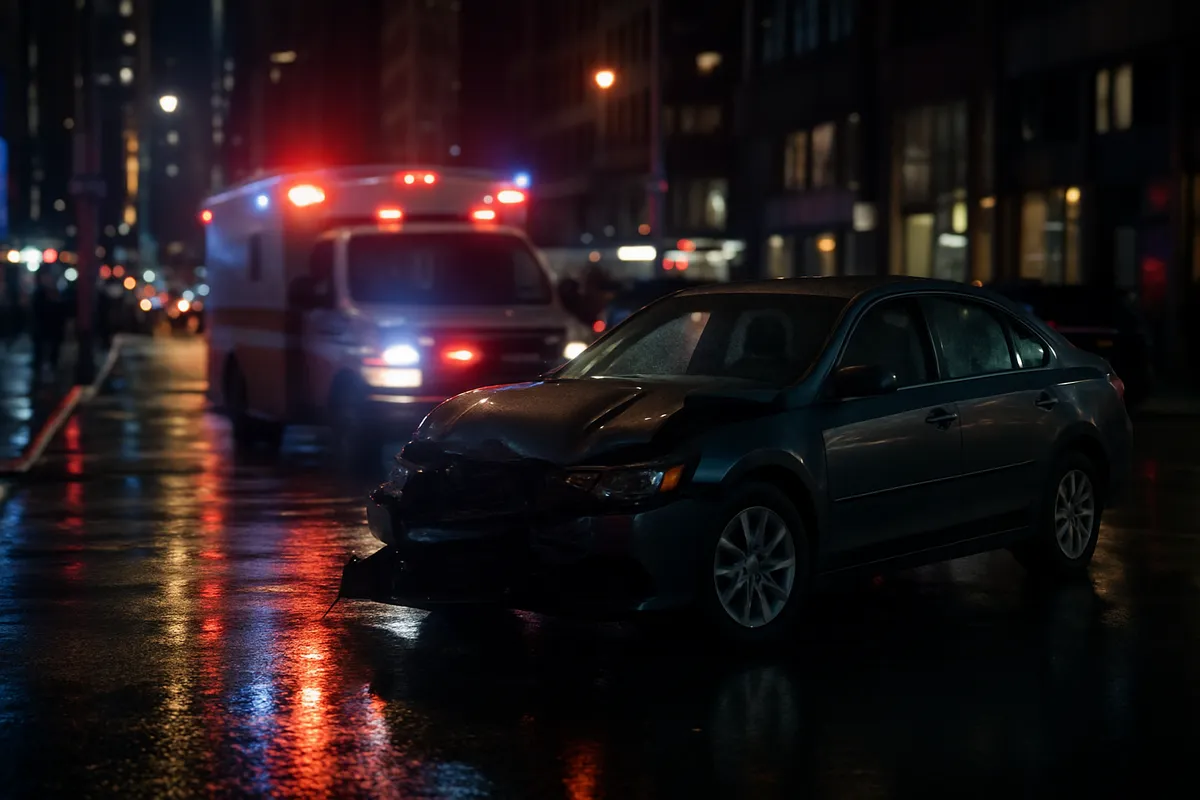
The trap is that this threshold often turns on a few lines in your medical chart. Fractures, permanent limitation, and being unable to handle daily activities for a set period can qualify as serious injury. If the first doctor writes the symptoms up as minor, walking that back later is an uphill fight. When Jay Koo pushes clients to get a thorough diagnosis right after a crash, this is the threshold he’s trying to clear.
Who else can be held responsible besides the driver?
A business that kept serving someone who was already visibly drunk. New York’s Dram Shop Act (§11-101) holds a bar or restaurant partly responsible for a crash when it sold alcohol to an obviously intoxicated customer.
This matters most when the driver is uninsured or carries a thin policy. A case that looked like it wouldn’t even cover your medical bills changes the moment a second defendant — the bar — comes into the picture. Tracing where the driver was drinking before the crash often decides how much you can actually recover.
When does New York allow punitive damages in a DUI case?
When the conduct goes past a simple mistake into recklessness the public can’t be expected to tolerate. A high BAC, a history of repeat DUIs, or fleeing the scene all support that argument.

Punitive damages aren’t money meant to make you whole. They exist to punish the driver and deter the next one. That changes what you have to prove. You have to show how blameworthy the driver’s conduct was, and the criminal record, witness accounts, and dashcam footage build that picture. Miss this, and the claim never reaches the negotiating table.
What should you do first to protect your claim?
Preserve evidence. Within days, the trail to the BAC record, the condition of the scene, and witnesses’ memories all start to fade.
Here’s how an ordinary crash and a drunk driving crash differ in what you need to lock down.
| Ordinary crash | Drunk driving crash | |
|---|---|---|
| Core issue | Percentage of fault | Recklessness + fault |
| Available damages | Economic & non-economic | + punitive damages |
| Extra defendant | Rare | The bar that overserved (Dram Shop) |
| Decisive evidence | Crash report, records | + BAC, criminal record |
Don’t put off treatment. A gap in care gives the insurer room to argue your injuries weren’t that serious. And keep a record of every call with the other side’s insurance company.
Frequently asked questions (FAQ)
Q. If the driver is convicted, does that set my compensation automatically?
No. The criminal and civil cases run separately. That said, a DUI conviction is strong evidence in your civil claim.
Q. The driver has no insurance. Is there nothing to recover?
There is. Your own uninsured/underinsured motorist coverage (UM/SUM) and a Dram Shop claim are the alternatives.
Q. I was partly at fault. Does that bar my claim?
No. New York uses comparative negligence, so your recovery is reduced by your share of fault rather than eliminated.
Q. When is the right time to settle?
After your condition has had time to stabilize. Settling early, before any lasting effects surface, usually works against you.
A drunk driving crash gives you more avenues to recover than an ordinary accident — which is exactly why so much gets left on the table. Looking past the at-fault driver’s policy to build the punitive and third-party claims at the same time is how Jay Koo approaches a New York DUI case.