

The short version
- The state where the crash physically happened is the starting point. On the George Washington Bridge or in the Holland Tunnel, whether the impact was on the New York or New Jersey side is the first question.
- When the drivers live in different states, New York courts don’t stop at “law of the place of the crash.” They run an interest analysis and the Neumeier rules to decide which state’s law governs damages and fault.
- New York uses No-Fault; New Jersey uses PIP. Both pay medical bills first, but the lawsuit thresholds differ. New Jersey’s Limitation on Lawsuit option and its deemer statute can bind a New York driver to New Jersey’s tougher suit threshold.
- The clock is different, too. New York gives you three years for personal injury (CPLR §214); New Jersey gives you two (NJSA 2A:14-2). And New York’s borrowing statute (CPLR §202) can pull the shorter deadline onto your case.
- These cases turn on early decisions. Jay Koo puts the crash location, each driver’s residency, and every policy on one table before choosing where and how to fight.
The Hudson River is the only thing between New York and New Jersey. Crashes happen on the bridges, inside the tunnels, and on the border roads every day, and the injured driver hits a wall fast: “I live in New York, the crash was in New Jersey, and the other car has plates from somewhere else. Whose law applies? Which court? Which insurance pays?” Get that wrong and you file in the wrong state, burn months, or blow a shorter statute of limitations and lose the claim entirely. Here is how each piece splits, in order.
Which state’s law applies to a border crash?
The law of the state where the crash physically occurred is the first reference point. A collision on a New Jersey road is judged by New Jersey’s traffic and negligence rules; one in New York, by New York’s. But when the drivers live in different states, damages and fault questions can shift under New York’s interest analysis.
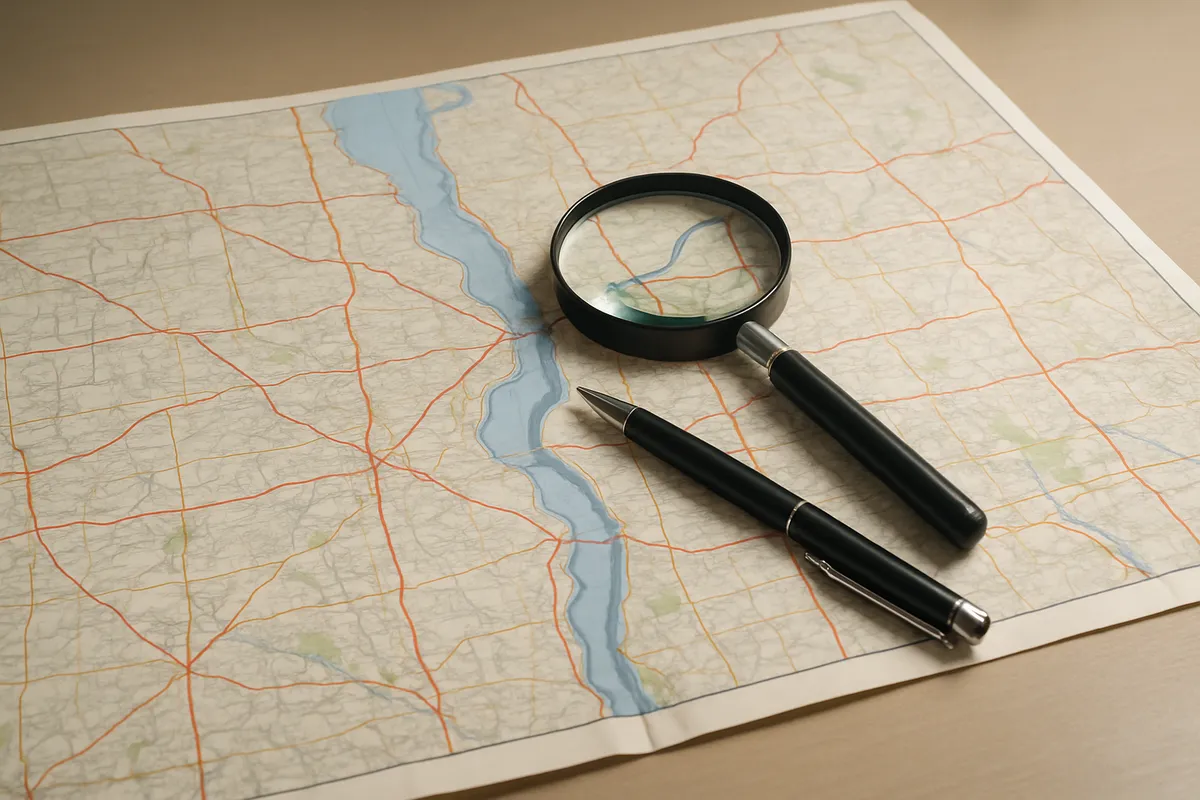
Split the question into two layers. Conduct-regulating rules — speed, signals, drunk driving, the rules of the road — generally follow the place of the crash. What happened on a New Jersey road gets measured against New Jersey traffic law.
Loss-allocating rules are different. These cover how fault reduces a recovery and what damages are available. Since Babcock v. Jackson, New York has rejected the mechanical “place of the wrong” test in favor of interest analysis, weighing which state has the real stake in applying its own law. For crashes between drivers from different states, New York applies the Neumeier rules, so the parties’ home states — not the crash site — can control the outcome. Two New York residents who collide in New Jersey may find New York law governing the loss-allocation questions.
In practice, where the governing law lands is where the money is won or lost, because fault and damages rules vary by state. That’s why pinning down the exact crash location and each driver’s residency comes first, before anything else.
Where can you actually file the lawsuit?
You can generally sue in the state where the crash happened, the state where the defendant lives, and any state whose courts have personal jurisdiction over the defendant. If the crash was in New York, New York’s long-arm statute (CPLR §302) often reaches a New Jersey driver in a New York court.
Jurisdiction and choice of law are two separate questions. Which court hears the case is one thing; which state’s law that court applies is another. A New York court applying New Jersey substantive law to a crash is routine, not unusual.
When you have a choice of forum, strategy enters. Statutes of limitation, available damages, suit thresholds, even jury tendencies differ by state, so the same crash can land differently depending on the courthouse. But as you’ll see below, New York’s borrowing statute checks this kind of forum shopping, so a court that looks favorable isn’t automatically favorable. If the other vehicle was a rental or a company car, identifying the right defendant and forum gets more tangled — the same knot covered in rental car accident liability disputes.
How is New York No-Fault different from New Jersey PIP?
Both systems pay medical bills first without arguing fault, but the suit thresholds and the choices baked into them differ. New York No-Fault (Insurance Law §5102) covers basic economic loss and gates pain-and-suffering suits behind a serious injury threshold (§5102(d)). New Jersey PIP covers medical bills but lets drivers pick a Limitation on Lawsuit option at signup.
Start with New York. No-Fault pays medical costs and some lost earnings regardless of fault, but to sue the at-fault driver for pain and suffering your injury has to clear the serious injury threshold — a fracture, a permanent limitation, and similar categories. If that framework is new to you, it’s worth first understanding how New York’s No-Fault system works.
New Jersey adds a choice on top. At signup, a driver picks the Limitation on Lawsuit option (the “verbal threshold”) or the No Limitation option. Choose the limitation and premiums drop, but you can’t sue for pain and suffering unless your injury fits the statutory categories — death, significant disfigurement, and the like. Which box the driver checked years ago decides whether a suit is even available now.
| Feature | New York (No-Fault) | New Jersey (PIP) |
|---|---|---|
| Medical bills paid first | Yes, via No-Fault | Yes, via PIP |
| Pain-and-suffering suit gate | Serious injury threshold (§5102(d)) | Verbal threshold if Limitation option chosen |
| Threshold is a choice? | No — statutory standard applies to all | Yes — limitation vs. no-limitation at signup |
| Personal-injury statute of limitations | Generally 3 years (CPLR §214) | Generally 2 years (NJSA 2A:14-2) |
As the table shows, the same injury can be suable under one state’s system and blocked under the other. So which state the crash happened in, and which state’s policy each driver carries, drives the whole analysis.
Does my New York policy cover a New Jersey crash? (The deemer trap)
Your own PIP/No-Fault generally follows you across state lines for your own injuries. The catch is New Jersey’s deemer statute (NJSA 17:28-1.4): a New York driver hurt in New Jersey can get pulled under New Jersey’s tougher suit threshold, and every out-of-state driver should know it.
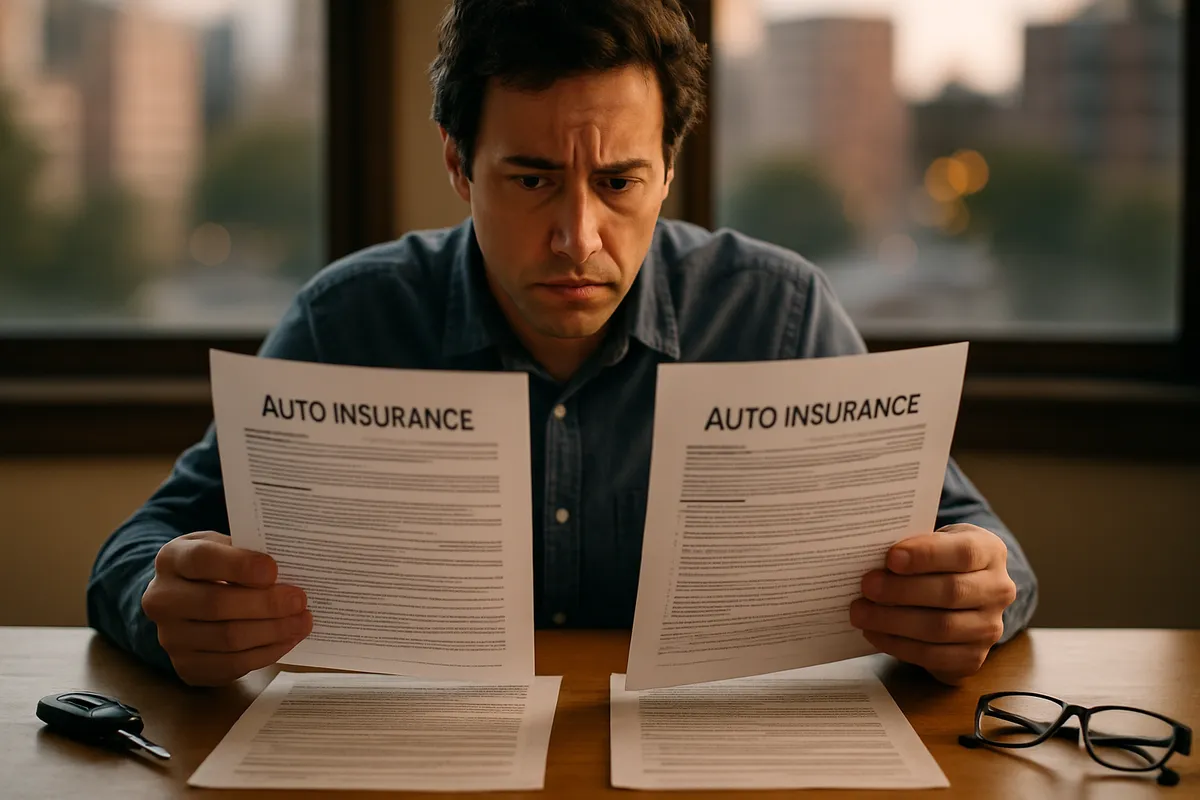
Here’s the mechanism. When an insurer that does business in New Jersey writes an out-of-state policy (say, a New York auto policy), that policy can be “deemed” to carry New Jersey’s minimum coverage and New Jersey’s verbal threshold if the insured is hurt in a New Jersey crash. New York has no lawsuit-limitation option at all, yet a New Jersey crash can force a New York driver to clear New Jersey’s threshold before suing for pain and suffering. It’s the trap out-of-state drivers miss most.
The reverse deserves a look too. A New Jersey driver hurt in New York can run into New York’s No-Fault rules and serious injury threshold. Either way, “it’s my policy, so my state’s rules apply” is a dangerous assumption. If the other car was uninsured or fled the scene, the math changes again, and your own uninsured motorist and hit-and-run (UM/SUM) coverage comes into play. Which state’s rules actually govern comes down to the policy language read against the crash location.
Which statute of limitations controls?
New York gives you roughly three years for personal injury (CPLR §214); New Jersey gives you two (NJSA 2A:14-2). Which one binds you depends on where you file, where the crash happened, and New York’s borrowing statute (CPLR §202).
This is the most dangerous spot. Drivers who assume “New York gives me three years” sometimes get caught by New Jersey’s two-year limit and lose the claim outright. Even filing in a New York court doesn’t guarantee the three-year window: for a non-resident’s claim that accrued outside New York, the borrowing statute (CPLR §202) can import the shorter deadline of the state where the crash happened. A New Jersey crash can bring New Jersey’s two years with it.
So for a border crash, move on the shortest possible deadline. The limitation period tangles with choice of law and jurisdiction and turns on the specific facts, so nail down the exact accrual date and the governing deadline right after the crash. Add a fault dispute on top and the math gets denser still — states apply comparative fault differently, which is why it pays to read this alongside how comparative negligence actually cuts a settlement.
Border crash — what should you do right now?
Pin down the exact crash location, confirm both drivers’ residency and insurance, and get a legal review immediately on the shortest applicable deadline. Those three moves are the backbone of a New York–New Jersey border-crash response.
In order:
- Fix the crash location. On bridges, in tunnels, and on border roads, use GPS, the police report, and scene photos to establish exactly which state’s segment you were in. That’s the starting point for both governing law and jurisdiction.
- Map residency and coverage. Confirm each driver’s home state, insurer, and policy options — especially whether a New Jersey policy carries the limitation-on-lawsuit choice. That drives the Neumeier and deemer analysis.
- Run on the shortest clock. Don’t lean on New York’s three years; plan around New Jersey’s two and the borrowing statute.
- Weigh the forum. Decide which state’s court helps you and which state’s law that court will apply.
- Lock in early treatment. Under either system, medical records tying the injury to the crash are the foundation for clearing any threshold.
There are too many moving parts here to sort out alone. In a first consult, Jay Koo puts the crash location, each driver’s residency, and every policy option on one table, checks choice of law, jurisdiction, and the statute of limitations together, and decides whether New York or New Jersey is the better ground to fight on.
Frequently asked questions (FAQ)
Q. If the crash happens mid-bridge or mid-tunnel, which state is it?
Bridges and tunnels carry a state boundary line, and the state of jurisdiction depends on which side of that line the impact occurred. GPS coordinates, the location noted in the police report, and roadway markers all feed that determination, so preserve location evidence right after the crash.
Q. I live in New York and was hit in New Jersey. Can I sue in a New York court?
Possibly, if the defendant lives in New York or has enough contacts with it. But even a New York court may apply New Jersey law to the loss-allocation issues, and the borrowing statute (CPLR §202) can import New Jersey’s two-year deadline — so choosing the forum takes care.
Q. Can a New Jersey crash block my pain-and-suffering suit even with a New York policy?
It can. Under New Jersey’s deemer statute (NJSA 17:28-1.4), a New York policy written by an insurer doing business in New Jersey may be deemed subject to New Jersey’s verbal threshold for a New Jersey crash. The policy language read against the crash location settles it.
Q. Is my deadline New York’s three years or New Jersey’s two?
It varies by case. Even in a New York court, a non-resident’s out-of-state claim can draw New Jersey’s shorter two years through the borrowing statute. The safe move is to work on the shortest deadline and confirm the exact date with counsel right after the crash.
Q. Should I file in both states to be safe?
Filing the same crash in two states runs into procedural bars and often backfires. The goal isn’t more lawsuits — it’s building one strongest strategy that weighs choice of law, jurisdiction, and the statute of limitations together from the start.
One state line rewrites the governing law, the court, the insurance, and the deadline all at once. Which side of the Hudson the crash happened on can turn the same collision into an entirely different case. Getting that right early is often the difference — Jay Koo finds the ground that favors you between New York and New Jersey before the other side does.