

Key takeaways
- The insurance adjuster who calls after your accident is not on your side. They are a trained negotiator paid to close your claim for as little as possible.
- Casual lines like “I’m sorry, I wasn’t really paying attention” or “I feel fine” can be used to cut your recovery under New York’s pure comparative negligence rule (CPLR 1411).
- You are not legally required to give the other insurer a recorded statement or sign a blanket medical authorization. Both hand the adjuster ammunition — your own words and your entire medical history.
- A fast settlement offer is a strategy, not a favor. Once you sign the Release, you cannot reopen the claim if your injury turns out to be worse than it looked.
- The number on the check is not what you keep. Medicare, Medicaid, ERISA health plans, No-Fault, and workers’ comp can all claim a slice through liens and subrogation, so those have to be resolved before you sign.
A fast phone call is not a good sign. When an adjuster reaches out a few days after the crash promising to “get this handled quickly,” most people read it as helpfulness. It usually is not. The window right after an accident — before anyone knows how far the injury will go — is exactly when the insurer can close the file cheapest. In New York, people who lose money settling on their own rarely lose it because the accident was minor. They lose it because a strong claim got handled badly. This is where that goes wrong, and what you should keep off the record.
Whose side is the insurance adjuster actually on?
The adjuster works for the insurance company, and their job is to keep the company’s payout low. Friendly and cooperative on the surface, they are measured by how little they pay you. Understanding that is your first line of defense.
Here is the part people miss. When an adjuster sounds warm and sympathetic, that is training, not kindness. A relaxed tone gets you talking, and the more you say, the more raw material they have to argue that you were partly at fault or barely hurt. In practice, the moment an injured person starts treating the adjuster as an ally, the negotiation has already tilted.
The rule attorney Jay Koo works from is blunt: every conversation with an adjuster is a negotiation, not a consultation. Answering their questions helpfully before you know what your own claim is worth is like laying your cards face-up and then starting to haggle. That is why you figure out how a New York injury claim is actually valued before you ever sit down at the table.
What should you never say to an insurance adjuster?
Anything that admits fault, downplays your injury, or guesses at facts. The three phrases that quietly sink New York injury claims are some version of “it was partly my fault,” “I’m fine, it’s not that bad,” and “I think I was going about…”

New York follows pure comparative negligence (CPLR 1411). Even if the other driver was 90% at fault, being found 10% at fault knocks 10% off your recovery. So the adjuster asks leading questions designed to shift a little of the blame onto you. A reflexive apology becomes the basis for that percentage.
| Don’t say | Why it hurts you | Say instead |
|---|---|---|
| “I’m sorry, I wasn’t paying attention” | Reads as an admission of fault → raises your comparative share | Stick to facts: “My light was green” |
| “I feel fine / it’s not that bad” | Used to downplay injuries and deny delayed symptoms | “I’m still being treated and evaluated” |
| “I was probably going about 40” | A guess gets recorded as fact | “I don’t recall exactly” |
| “How much will you pay me?” | Signals you’re in a hurry → invites a lowball | Discuss numbers only after valuing the claim |
| “I’ve never had any other injuries” (when unsure) | If it’s wrong, it becomes a credibility attack | Don’t state anything you’re not certain of |
Two rules carry most of the weight. Say only what you know for a fact, and leave out guesses, apologies, and emotion. And never call yourself “fine” before you’ve been cleared, because delayed injuries — whiplash, disc, nerve, and concussion symptoms — often show up days later, not at the scene.
Do you have to give a recorded statement or sign a medical release?
No — both are requests you can refuse or narrow, and usually should. A recorded statement exists to lock in something you can be held to later, and a blanket medical authorization hands the other side your entire history, not just this accident.
Start with the recorded statement. The adjuster frames it as “just routine,” but you have no legal obligation to give the other driver’s insurer a recorded statement. The recording resurfaces the instant your account shifts even slightly, and it gets used to contradict you. A recorded “I feel fine” is especially dangerous — it can undercut a delayed-injury claim entirely.
The blanket medical authorization is the quieter trap. It is pitched as a way to “verify your treatment,” but signing a broad release gives the insurer access to years of unrelated medical records. They mine that file for a “pre-existing condition” defense — an old complaint about the same body part becomes their argument that the accident did not cause your injury. If an authorization is genuinely needed, limit it to records tied to this accident, narrowed by provider and date. When that call is close, it is worth mapping out the whole strategy first, including whether the case should be settled or taken to court.
Why is the insurer’s “quick settlement” offer risky?
Because it closes the file cheaply before your injury has fully revealed itself. A fast settlement right after the crash is not consideration for you — it is the insurer avoiding the future treatment and complications it would otherwise have to cover.
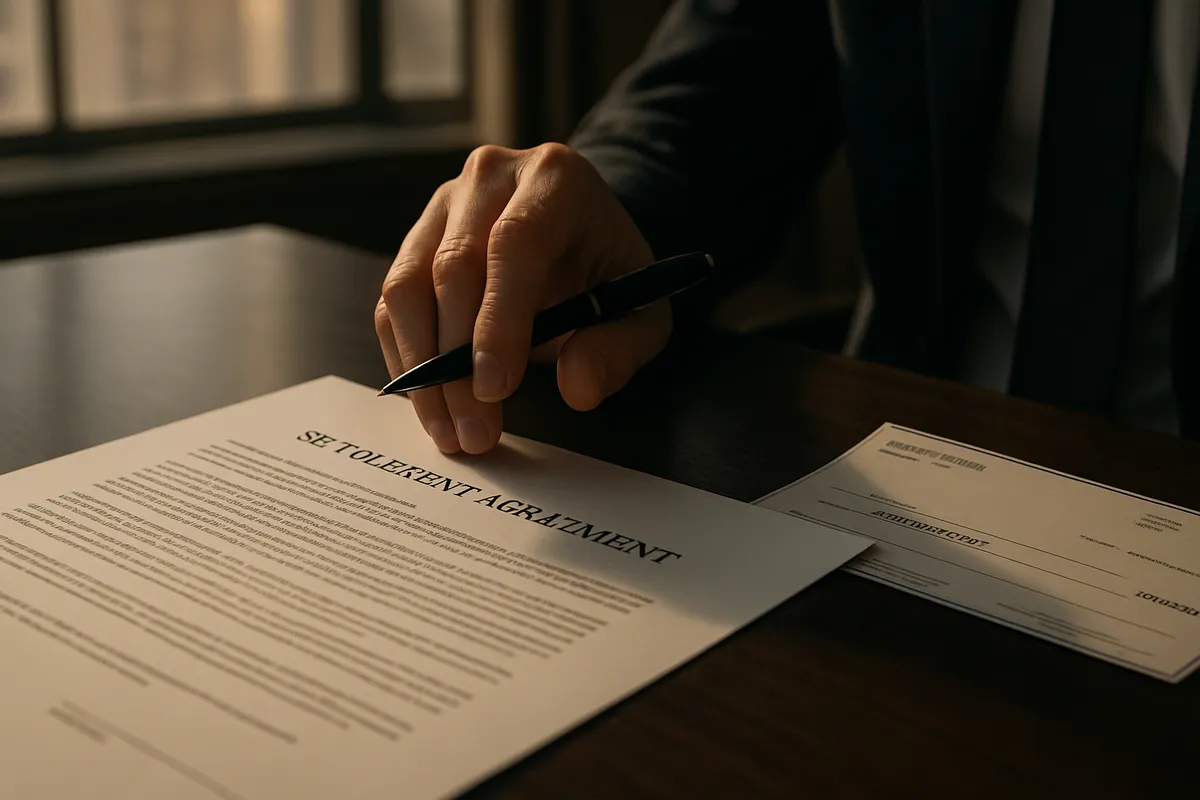
The biggest danger is that it is final. Settlement papers almost always include a Release, and once you sign, you cannot bring another claim from the same accident. If a disc herniates or you need surgery months later, the door is shut. In a car accident, New York’s No-Fault system (Insurance Law 5102 and 5104) only lets you pursue pain and suffering from the at-fault driver if you clear the serious injury threshold (5102(d)) — and you cannot judge that threshold before the full injury is known.
A quick settlement is especially risky when:
- Treatment isn’t finished. Before you reach maximum medical improvement (MMI), no one can total the damages.
- A delayed injury is possible. Spine, concussion, and nerve symptoms surface late.
- The other driver is uninsured or underinsured. Here you slow down and look first at your own uninsured/underinsured motorist (UM/SUM) coverage rather than rush to sign.
The party with a reason to hurry is the insurer, not you. Time usually works in the injured person’s favor as the diagnosis becomes clear.
What has to be settled before you sign the release?
The scope of the release, and the liens and subrogation that come out of your settlement. The number above the signature line is not your take-home. Medicare, Medicaid, your health plan, No-Fault, and workers’ comp may each recover first.
Sign without accounting for those and the amount that actually reaches you shrinks — sometimes a lot. Here is what tends to come off the top:
- Medicare/Medicaid liens. If public coverage paid for accident-related care, the federal and state programs have a right to recover from your settlement.
- Health plan (ERISA) subrogation. If an employer health plan paid your medical bills, its terms often let it claim reimbursement.
- No-Fault and workers’ comp offsets. Benefits already paid can be coordinated to avoid a double recovery.
- Contingency fee and case costs. Most injury lawyers work on a contingency fee, and how expenses like records retrieval are handled varies by agreement.
Negotiating those liens down is one of the things attorney Jay Koo does before any settlement closes — often lowering the lien itself to protect what you actually keep. Handle the claim alone and this step gets skipped entirely, so a bigger gross number can leave you with less in hand.
When should you actually hire a lawyer?
If the injury is more than minor, or fault or coverage is in dispute, the best time is before you start settlement talks. In New York injury cases, a lawyer’s value shows up at the negotiating table and in the early moves, not just in a courtroom.
The line is clear. Injuries that need medical treatment, accidents where fault is contested, an uninsured or underinsured other driver, or a claim against a city or state entity — none of those are worth handling solo. A public-entity claim is its own clock: you generally have to file a Notice of Claim within 90 days (General Municipal Law 50-e), with a shortened suit period (50-i), which is nothing like the standard three-year personal injury statute of limitations (CPLR 214).
The fact that most injury lawyers work on contingency matters too. There is no retainer up front, and the fee is a percentage collected only if you recover — so the worry that “a lawyer will cost me more” often does not match the actual math. From the first consultation, Jay Koo maps out how to handle the adjuster, how the liens will work, and roughly what the case is worth, so the plan is built around what leaves you with the most in the end.
Frequently asked questions (FAQ)
Q. Can I refuse the adjuster’s request for a recorded statement?
Yes. You are not legally required to give the other driver’s insurer a recorded statement. It is safer to decline politely, or to give one only after talking to a lawyer and setting its scope. Recordings get used to contradict you later if your account changes.
Q. Why is it a problem to say “I feel fine”?
That single line gets logged as downplaying your injuries, which makes it harder to claim a delayed injury that appears days later. Until you’ve been medically cleared, “I’m still being treated and evaluated” is the safer answer.
Q. Should I always reject a quick settlement offer?
Not always, but if treatment isn’t finished or the injury’s course is uncertain, don’t rush. Because of the Release in the settlement papers, you cannot bring another claim from the same accident once you sign.
Q. Do I keep the full settlement amount?
No. Liens and subrogation from Medicare, Medicaid, an ERISA health plan, No-Fault, and workers’ comp, plus attorney’s fees and costs, can be deducted. To protect your net, those have to be resolved before you sign.
Q. How long do I have to bring an injury claim in New York?
The standard personal injury statute of limitations is generally three years from the accident (CPLR 214). But if the defendant is a city or state entity, you usually must file a Notice of Claim within 90 days (GML 50-e) and the suit period is much shorter, so early action is critical.
Dealing with an insurer in New York is an information contest, not a test of nerve. They do this every day; you’re doing it for the first time. Knowing what not to say and what not to sign can change the outcome on its own — and attorney Jay Koo steps in before that first phone call to reset the table in favor of protecting what your case is actually worth.